Buy Sid Meier's Civilization VI: Byzantium & Gaul Pack at the Best Price
- PC


Top retailers
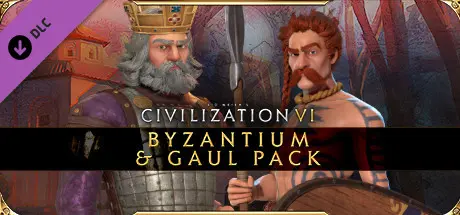
Civilization VI expands once again with the addition of new content: the Byzantium & Gaul Pack! This DLC adds two nations to the base game: Byzantium, led by Basil II, and Gaul, led by Ambiorix. Each faction has its own unique abilities, buildings, and units.
Byzantium:
Unique Unit - the Dromon, which replaces the Quadrireme and gains extra attack strength and range; and the Tagma, which replaces the Knight and grants Combat and Religious strength to other units
Unique Building - The Hippodrome, replacing the Entertainment Complex
Unique Ability - Taxis, which gives units additional combat or religious strength based on the number of cities that converted to the Byzantium religion
Gaul:
Unique Unit - Gaesatae, which replaces the warrior and gains bonuses when fighting stronger units and district defenses
Unique Building - The Oppidum, a defensible building that unlocks the Apprenticeship tech.
Unique Ability - “Hallstatt Culture” lets you Culture Bomb unoccupied territory and lets your mines give adjacency bonus to your districts
Also included is the new Dramatic Ages game mode (requires the Civilization VI Expansion Bundle), a new Map Type and two new World Wonders: the statue of Zeus and the Biosphere.
Pave the way to a new Golden Age with Civilization VI - Gaul and Byzantium.
Best deals for Sid Meier's Civilization VI Byzantium & Gaul Pack


Technical information
- Official website
- Categories : Strategy
- Editor : 2K
- Developer : Firaxis Games
- Release date : September 24, 2020
- System Requirements
-
- Minimum
- OS: Windows 7 (64-bits)
- CPU : Core i3 / Phenom II
- RAM : 4 GB
- GPU : GeForce 450 / Radeon 5570
- Storage : 12 MB
- Recommended
- OS: Windows 7x64 / Windows 8.1x64 / Windows 10x64
- CPU : Fourth Generation Intel Core i5 2.5 Ghz or AMD FX8350 4.0 Ghz or greater
- RAM : 8 GB RAM
- GPU : 2GB & AMD 7970 or nVidia 770 or greater
- Storage : 12 MB available space
- Age Rating
-



DLC available
-
 £5.49Civilization 6 Leader PassEneba
 -
 £2.82Sid Meiers Civilization 6 Portugal PackEneba
 -
 £2.75Sid Meier's Civilization VI – Vietnam & Kublai Khan PackEneba
 -
 £2.43Sid Meiers Civilization 6 Babylon PackEneba
 -
 £1.57Sid Meier's Civilization VI Ethiopia PackEneba
 -
 £4.43Civilization 6 New Frontier PassEneba
 -
 £2.74Sid Meier's Civilization VI Maya & Gran Colombia PackEneba
 -
 £7.64Civilization 6 Gathering StormEneba
-
News on DLCs and Expansions
-
Civilization 7 is now in development2/21/23
-
Firaxis announces more content for Civilization VI5/12/20
-
Civilization VI is free on Steam for a very limited time2/13/19
-
Civilization VI: Gathering Storm, bad weather incoming2/12/19
RATING
- Steam 22 / 16
Articles related to the Civilization series
-
Civilization VII brings important changes to the franchise2/7/25
-
2K shows Civilization VII at Gamescom8/21/24
- Same Franchise
-
£11.25Civilization 7eBay
-
 £2.46Sid Meier's Starships and Civilization Beyond EarthKinguin
 -
 £1.28Civilization Beyond EarthKinguin
 -
 £5.86Sid Meier's Civilization Beyond Earth Classics BundleKinguin
 -
 £1.02Civilization 5Kinguin
 -
 £0.90Civilization 4 ColonizationKinguin
 -
 £0.63Civilization 4Kinguin
 -
 £0.20Civilization 3Eneba
- Also Published By 2K
-
£37.17NBA 2K27Eneba
-
£19.93WWE 2K26K4G
-
£19.58Borderlands 4Eneba
-
£6.09NBA 2K26K4G
-
 £15.17Mafia The Old CountryeBay
 -
 £10.68WWE 2K25Eneba
 -
 £9.68PGA TOUR 2K25Eneba
 -
 £5.28NBA 2K25K4G
 -
 £6.98TopSpin 2K25Eneba
 -
 £10.41WWE 2K24eBay
- Most Popular
-
£21.03WardogsEneba
-
£14.05ValheimGame Boost
-
£22.93Halloween The GameLootBar
-
£35.77Blood of DawnwalkerKinguin
-
£17.66Diablo 4 Lord of HatredKinguin
-
£30.06Crimson Desert EnhancedGame Boost
-
£32.37Onimusha Way of the SwordEneba
-
£32.89Forza Horizon 6Eneba
-
£47.90Grand Theft Auto 6Eneba
-
£28.23STAR WARS Zero CompanyEneba
- New games
-
£47.95Trails in the Sky 2nd ChapterThe Game Collection
-
£43.28Train Sim World 7HRKGAME
-
£3.55Marvel's WolverineKinguin
-
£5.78Dunebound TacticsGame Boost
-
£3.90CloudscrapersGreenmanGaming
-
£7.59Golden SwirlKinguin
- Available soon
-
£23.95Sniper DanThe Game Collection
-
 £32.99The Grinch 2 Saving ChristmasCurrys
 -
£16.99The Walking Dead Streets of SurvivalSteam
-
£15.99Graveyard Keeper 2PlayStation Store
-
Feed
-
Civilization is the most iconic turn-based series of all time, but Sid Meier considered making it an RTS: 'It could have easily gone in different directions'6/17/26 PC Gamer
-
Linux kernel patch can boost the Steam Deck's 1% low frame rate by as much as 31% in early testing7/29/26 PC Gamer
-
Celebrate Labor Day by playing Civilization 7 for free9/4/26 PC Gamer
-
Civilization 7 will finally enter the atomic age in 2027, via a free update Firaxis says will be 'even bigger in scope' than last year's Test of Time9/6/26 PC Gamer
- Trending Now
- Summer Event 2026 Wrap-Up & Leaderboard9/1/26Gaming News
- BlizzCon 2026: Diablo V, a new StarCraft, and World of Warcraft: Forever9/13/26Gaming News
- Warhammer 40,000: Space Marine 2 Patch 15 Brings Chaos to Siege9/4/26Gaming News
- GTA VI gets two flashy limited-edition DualSense controllers before release9/4/26Hardware News
- The Blood of Dawnwalker is already a hit on Steam9/3/26Gaming News
- News, Good deals
- Farming, horror, and RPG madness collide in Welcome to Elderfield10 hours agoGaming News
- Is Logan enough for Marvel's Wolverine to succeed?9/14/26Gaming News
- Call of Duty: Modern Warfare 4’s Pre-Order Bonus is special on Xbox9/10/26Gaming News
- Sucker for Love: Crush Landing Turns Cosmic Horror Into Romance9/10/26Gaming News
- No Man’s Sky Overhauls Space with the COSMOS 7.0 Update9/9/26Gaming News
- Valheim officially leaves Early Access with version 1.09/9/26Gaming News
answering the message of